
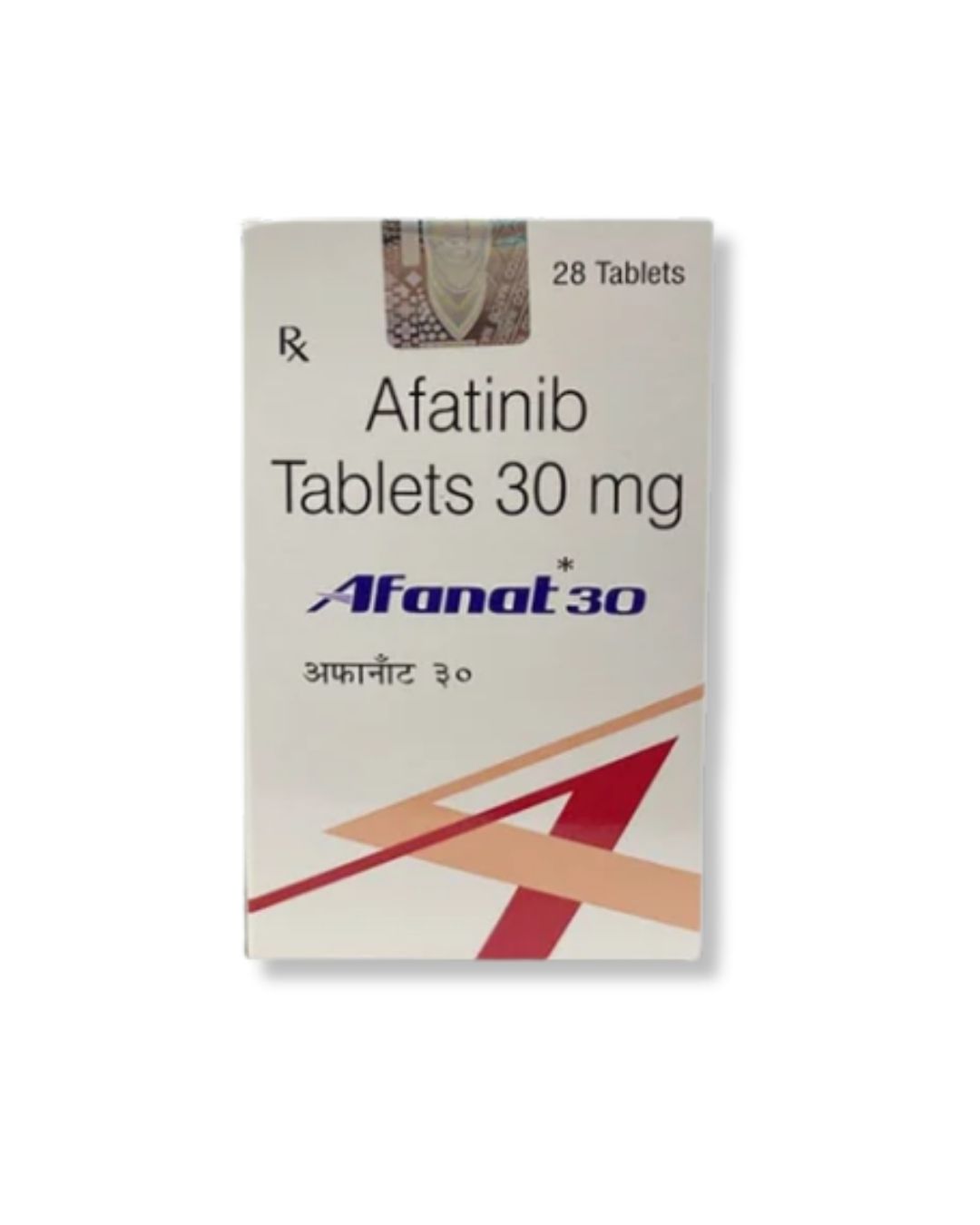
AFANAT 30MG TABLET
| Product Name | AFANAT |
|---|---|
| Strength | 30 mg |
| Active Ingredient | Afatinib Dimaleate |
| Dosage Form | Tablet |
| Therapeutic Class | Anticancer/Targeted Therapy |
| Indication | EGFR-positive non-small cell lung cancer |
| Route of Administration | Oral |
| Packaging | Blister strip/bottle (as available) |
| Storage | Store below 25°C; protect from moisture |
| Regulatory Status | Prescription medicine |

AFANAT 30MG TABLET
AFANAT 30mg Tablet contains afatinib dimaleate, a second-generation EGFR tyrosine kinase inhibitor (TKI) indicated for the treatment of epidermal growth factor receptor (EGFR) mutation-positive non-small cell lung cancer (NSCLC). It works by irreversibly blocking EGFR signaling pathways that promote cancer cell growth and progression. This medicine is used strictly under the supervision of an oncologist.
AFANAT 30 mg Tablet helps inhibit abnormal EGFR activity responsible for uncontrolled tumor growth in EGFR mutation-positive NSCLC. As a targeted treatment option, it supports disease control by reducing cancer cell proliferation and slowing disease progression. Regular medical monitoring is essential to assess therapeutic response and manage potential side effects during treatment.
AFANAT 30 mg Tablet is an advanced anticancer therapy used in modern oncology care. This oral pharmaceutical product delivers targeted molecular action against cancer cells, making it a valuable option in EGFR-driven lung cancer management. AFANAT 30 mg Tablet should always be administered as part of a personalized treatment plan under expert oncologist supervision to ensure safe and effective anticancer outcomes.
Product Feature
- Afatinib Dimaleate 30 mg
- EGFR tyrosine kinase inhibitor (TKI)
- Used in the treatment of EGFR-mutated non-small cell lung cancer (NSCLC)
- Oral targeted cancer therapy
- Helps inhibit tumor cell growth and spread
- Manufactured under strict quality-controlled standards
- Suitable for hospital and oncology use
- Available for retail and export supply.
How It Helps
- Blocks EGFR signaling pathways that promote cancer cell growth
- Helps slow tumor progression in EGFR-mutated NSCLC
- Targets cancer cells with minimal impact on healthy cells
- Supports effective disease control under the oncologist’s supervision


Reviews
There are no reviews yet.