
How Serialization Helps Track Medicines
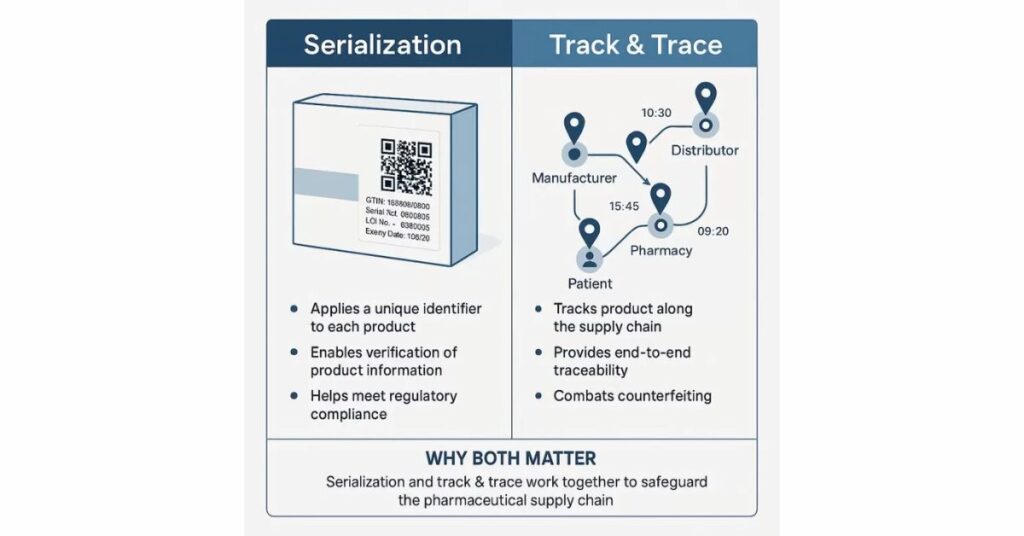
The global pharmaceutical industry faces a growing challenge: ensuring that medicines reaching patients are genuine, safe, and traceable. Counterfeit drugs, supply chain inefficiencies, and a lack of transparency can put patient lives at risk. Serialization has emerged as a powerful solution to address these issues by enabling end-to-end tracking of medicines across the supply chain.
What is Serialization in Pharmaceuticals?
Serialization is the process of assigning a unique identification code to each unit of a medicine product. This code, often in the form of a barcode or QR code, contains essential information such as product details, batch number, manufacturing date, and expiry date. These codes allow every package to be tracked from production to the point of sale.
For pharmaceutical exporters, serialization plays a crucial role in ensuring the authenticity of products throughout the global supply chain. Learn more about pharmaceutical exports at Good Faith Pharma.
How Serialization Works
Each medicine pack is labeled with a unique serial number during manufacturing. As the product moves through the supply chain—from manufacturer to distributor to pharmacy—this code is scanned and recorded in a centralized system. This creates a digital trail that can be accessed to verify the product’s authenticity and location at any time.
Benefits of Serialization
1. Prevents Counterfeit Medicines
Serialization makes it easier to identify fake drugs by verifying unique product codes. This is crucial for commonly used medications like Paracetamol and Amoxicillin. Pharmaceutical companies supplying antibiotic products can improve safety and compliance through serialization. You can explore antibiotic products such as DOO CLAV 1.2G Injection.
2. Improves Traceability
With serialization, every step of the supply chain is recorded. This allows manufacturers and regulators to track medicines such as insulin from production to patient delivery.
3. Enhances Patient Safety
By ensuring that only genuine medicines reach patients, serialization reduces the risk of ineffective or harmful treatments.
4. Efficient Product Recalls
In case of defects or safety concerns, serialization enables quick identification and recall of affected batches without disrupting the entire supply chain.
5. Regulatory Compliance
Many countries have made serialization mandatory to improve drug safety and supply chain transparency. Compliance with these regulations is essential for pharmaceutical companies.
Role in Medication Management
Serialization supports better medication management by providing accurate and real-time data. For example:
- Chronic disease treatments like Metformin can be tracked to ensure consistent availability
- Cardiovascular drugs such as Atorvastatin can be monitored for distribution efficiency
- Antibiotics like Amoxicillin can be verified for authenticity before dispensing
This improves trust among healthcare providers and patients while reducing medication errors.
Challenges of Serialization
1. High Implementation Costs – Setting up serialization systems requires investment in technology, infrastructure, and training.
2. Data Management Complexity – Handling large volumes of serialized data can be challenging and requires robust IT systems.
3. Integration Issues – Integrating serialization with existing supply chain systems can be complex and time-consuming.
4. Global Standardization – Different countries have varying serialization requirements, making global compliance difficult.
Future of Serialization in Healthcare
The future of serialization lies in its integration with advanced technologies such as blockchain, artificial intelligence, and the Internet of Things (IoT). These technologies will enhance real-time tracking, improve data accuracy, and further strengthen supply chain transparency.
Businesses exporting pharmaceutical products globally can leverage these technologies to build safer and more transparent supply chains. Visit Good Faith Pharma Product Catalog to explore a wide range of pharmaceutical products.
Conclusion
Serialization is a critical tool in modern pharmaceutical supply chains, helping to track medicines, prevent counterfeiting, and ensure patient safety. By enabling real-time visibility and traceability of drugs like Paracetamol, Insulin, and Metformin, serialization enhances trust and efficiency in healthcare systems. Despite challenges such as cost and data complexity, its benefits make it an essential component of safe and reliable medicine distribution.