
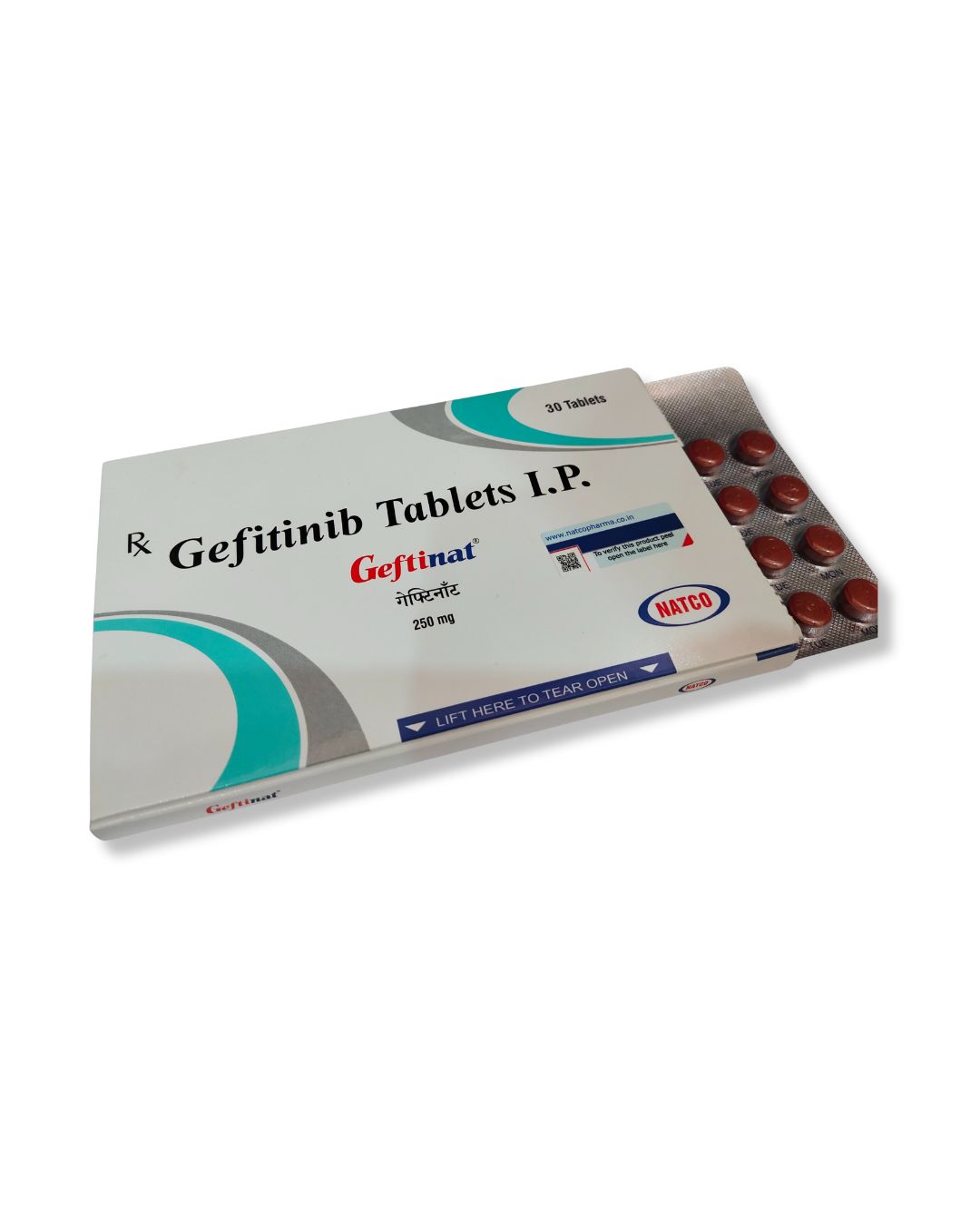
Geftinat Tablets 250 Mg
| Product Name | Geftinat Tablets |
| Active Ingredient | Gefitinib |
| Strength | 250 mg |
| Dosage Form | Film-coated tablets |
| Route of Administration | Oral |
| Indication | EGFR-mutated non-small cell lung cancer (NSCLC) |
| Usage | Once-daily dosing as prescribed by an oncologist |
| Appearance | Tablet |
| Packaging | Blister pack/bottle (as per manufacturer) |
| Storage Conditions | Store below 25°C and protect from moisture and light |
| Shelf Life | As per the manufacturer’s label |
| Regulatory Status | Prescription medicine |

Geftinat Tablets 250 Mg
Geftinat Tablets 250 mg are a prescription oral anticancer medication containing Gefitinib, a targeted tyrosine kinase inhibitor used in the treatment of certain types of non-small cell lung cancer (NSCLC). It works by selectively inhibiting the epidermal growth factor receptor (EGFR), which plays a key role in the growth and spread of cancer cells. This targeted mechanism helps slow disease progression while minimizing effects on healthy cells when used as prescribed.
It’s offering a focused treatment approach compared to traditional chemotherapy. By blocking EGFR signaling pathways, Geftinat helps reduce tumor cell proliferation and supports improved disease control. Its convenient oral tablet form allows for easier administration and better treatment compliance under an oncologist’s supervision.
Geftinat Tablets 250 mg are intended for use only under medical guidance. This product is widely used in oncology practice. Geftinat is trusted for its role in modern targeted cancer treatment, supporting improved outcomes and patient quality of life.
Product Features
- Contains Gefitinib 250 mg, a targeted EGFR tyrosine kinase inhibitor.
- Used in the treatment of EGFR-mutated non-small cell lung cancer (NSCLC).
- Helps inhibit cancer cell growth by blocking EGFR signaling pathways.
- Oral tablet dosage form for convenient once-daily administration.
- Offers targeted therapy with reduced impact on healthy cells.
How It Helps
- Helps slow the growth and spread of cancer cells by targeting the EGFR pathway.
- Supports effective management of EGFR-mutated non-small cell lung cancer.
- Reduces tumor cell proliferation through targeted molecular action.
- Provides a focused therapy approach compared to conventional chemotherapy.


Reviews
There are no reviews yet.