
The Role of Packaging in Drug Stability
Pharmaceutical packaging plays a critical role in maintaining the stability, safety, and effectiveness of medicines. From protecting drugs against environmental factors to ensuring proper dosage and patient compliance, packaging is far more than just a container—it is an essential component of drug delivery and quality assurance. Companies involved in pharmaceutical products and exports understand that proper packaging is essential for maintaining the quality of medicine throughout the supply chain.
What is Drug Stability?
Drug stability refers to the ability of a pharmaceutical product to maintain its physical, chemical, microbiological, and therapeutic properties throughout its shelf life. Factors such as temperature, light, moisture, oxygen, and contamination can significantly affect drug stability. Proper packaging is designed to protect medicines from these external influences.
Maintaining stability is especially important for medicines distributed through global pharmaceutical supply chains, where products may be exposed to different environmental conditions during storage and transportation.
Importance of Packaging in Drug Stability
1. Protection from Environmental Factors
Packaging shields drugs from light, humidity, air, and temperature variations. For example, light-sensitive medicines are often stored in amber-colored bottles to prevent degradation.
2. Prevention of Contamination
Sealed and sterile packaging prevents microbial contamination, which is especially important for injectable drugs and liquid formulations.
3. Maintaining Chemical Integrity
Certain drugs can react with air or moisture, leading to reduced potency. Packaging materials are selected to prevent such interactions and preserve drug composition.
4. Extended Shelf Life
Proper packaging helps maintain drug stability over time, ensuring that medicines remain effective until their expiration date.
5. Improved Patient Compliance
User-friendly packaging—such as blister packs and pre-filled syringes—ensures accurate dosing and ease of use, reducing medication errors.
Types of Pharmaceutical Packaging
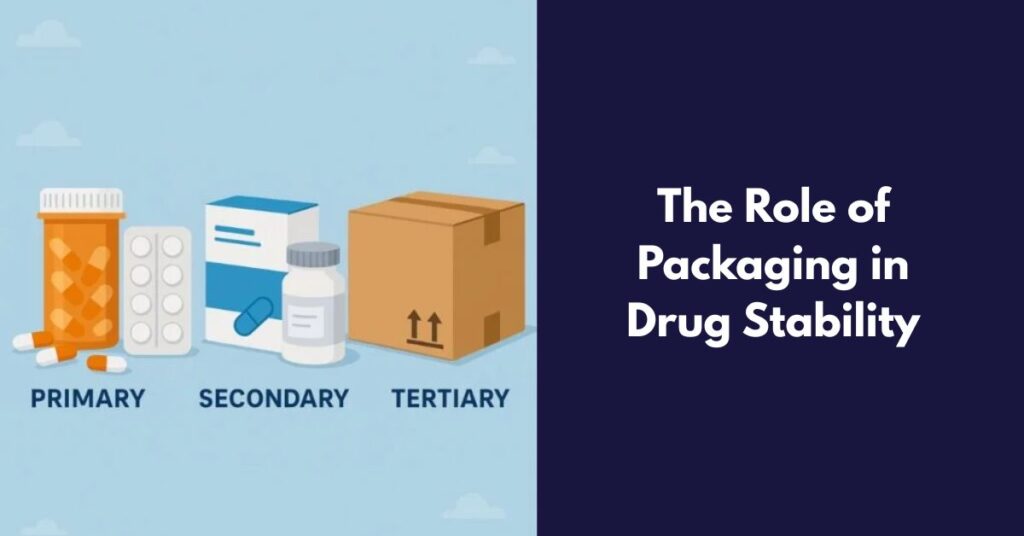
1. Primary Packaging – This is the material that directly comes in contact with the drug, such as blister packs, bottles, vials, and ampoules.
2. Secondary Packaging – Outer packaging that provides additional protection and includes labeling information, such as cartons and boxes.
3. Tertiary Packaging – Used for bulk handling, storage, and transportation of pharmaceutical products.
Role in Medication Safety and Treatment
Proper packaging ensures that medicines retain their effectiveness and safety. For example:
- Insulin requires temperature-controlled packaging to maintain its potency
- Nitroglycerin must be stored in airtight containers to prevent degradation
- Amoxicillin is often packaged in moisture-resistant blister packs to maintain stability
Inadequate packaging can lead to reduced drug efficacy, treatment failure, or even harmful side effects.
Advanced Packaging Technologies
- Blister Packaging: Protects individual doses from moisture and contamination
- Child-Resistant Packaging: Prevents accidental ingestion
- Tamper-Evident Packaging: Ensures product integrity and safety
- Smart Packaging: Uses sensors and indicators to monitor temperature and humidity
These innovations enhance drug stability and improve patient safety.
Challenges in Pharmaceutical Packaging
- High cost of advanced packaging materials
- Environmental concerns related to plastic waste
- Need for compatibility between the drug and the packaging material
- Regulatory compliance requirements
Future of Drug Packaging
The future of pharmaceutical packaging is focused on sustainability, smart technology, and patient-centric design. Eco-friendly materials and digital tracking systems will play a key role in improving both environmental impact and supply chain efficiency.
Conclusion
Packaging is a vital factor in ensuring drug stability, safety, and effectiveness. Protecting medicines from environmental and chemical degradation plays a crucial role in successful treatment outcomes. Drugs like Insulin, Nitroglycerin, and Amoxicillin depend on proper packaging to maintain their quality and therapeutic value. As technology advances, innovative packaging solutions will continue to enhance drug stability and patient safety, making it an indispensable part of modern healthcare.